


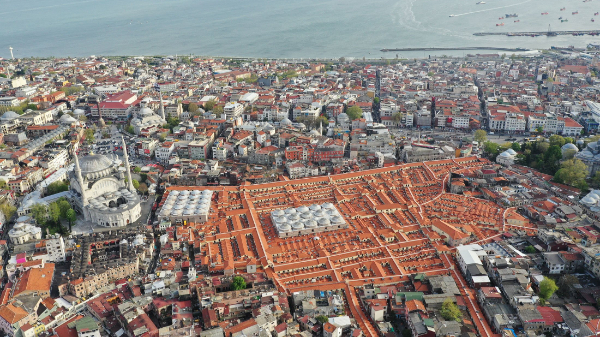
Istanbul’s Grand Bazaar stands as a testament to the city’s rich cultural heritage, serving as a vibrant center of trade and craftsmanship for centuries. Among its bustling corridors and maze-like alleys, the legacy of gold and jewelry craftsmanship emerges as a cornerstone of its historical significance.
Dating back to the 15th century, the Grand Bazaar has been a focal point of commerce and culture in Istanbul, witnessing the rise and fall of empires and serving as a melting pot of diverse civilizations. It was during the height of the Ottoman Empire that the Grand Bazaar flourished, becoming one of the largest and most renowned marketplaces in the world.
Within its labyrinthine confines, skilled artisans specializing in gold and jewelry craftsmanship thrived, drawing inspiration from the rich cultural tapestry of the region. Techniques passed down through generations melded with influences from Byzantine, Persian, and Arab traditions, resulting in a distinctive Ottoman style characterized by intricate designs and impeccable artistry.
The history of gold and jewelry craftsmanship in Istanbul’s Grand Bazaar is deeply intertwined with the city’s storied past. During the Byzantine era, Constantinople (modern-day Istanbul) was renowned for its goldsmiths and jewelers, who adorned emperors and aristocrats with exquisite treasures. With the conquest of Constantinople by the Ottomans in 1453, these artisans found a new home within the walls of the Grand Bazaar, where their skills flourished amidst a thriving commercial atmosphere.
One of the most significant periods in the evolution of gold and jewelry craftsmanship in the Grand Bazaar occurred during the reign of Suleiman the Magnificent (1520–1566). Under his patronage, the arts experienced a golden age, with artisans producing works of unparalleled beauty and sophistication. The finest examples of Ottoman jewelry from this era are characterized by intricate filigree work, vibrant gemstones, and motifs inspired by nature and Islamic art.
Throughout the centuries, the Grand Bazaar continued to be a hub of innovation and creativity in the realm of gold and jewelry craftsmanship. Artisans adapted to changing tastes and trends, incorporating influences from Europe and the Far East while maintaining the distinctive Ottoman aesthetic.
Despite the passage of time and the emergence of modernization, Istanbul’s Grand Bazaar remains a bastion of tradition and heritage. Today, visitors can still witness the age-old craft of gold and jewelry making being practiced within its storied walls, a living testament to centuries of craftsmanship and cultural exchange.
In conclusion, the Grand Bazaar’s role in the evolution of gold and jewelry craftsmanship is undeniable. From its humble beginnings as a marketplace in the heart of Istanbul to its status as a global icon of cultural heritage, it continues to inspire awe and admiration as a living repository of history and craftsmanship.
