


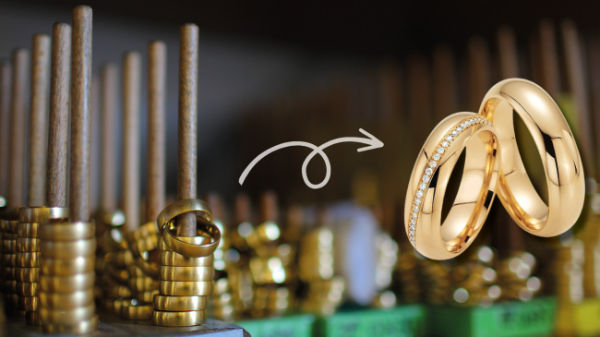
Designing gold rings entails a delicate balance between aesthetic allure and technical feasibility. Beyond mere beauty, ensuring that a ring design is truly manufacturable involves a myriad of technical considerations. From material selection to structural integrity, each aspect plays a pivotal role in crafting a ring that not only dazzles but also endures the test of time. In this discourse, we delve into the intricate web of technicalities underpinning the design process of gold rings. By exploring material choices, manufacturing methods, gemstone settings, and ergonomic factors, we uncover the nuanced interplay between creativity and engineering precision. Through this lens, we gain a deeper appreciation for the craftsmanship and ingenuity required to transform a mere concept into a tangible symbol of elegance and sophistication. Join us as we unravel the complexities behind the art of designing manufacturable gold rings.
- Material Selection: The choice of gold alloy is crucial. Different alloys have varying properties such as hardness, malleability, and color. Alloy selection affects both the manufacturability and durability of the ring. For example, 18K gold (75% gold, 25% alloy) is commonly used for its balance of purity and strength.
- Design for Casting or Machining: The manufacturing method significantly influences the design. For casting, the design must consider factors such as mold complexity, material flow, and cooling rates to ensure complete filling and minimal defects like porosity. In contrast, machined rings require designs suitable for subtractive manufacturing processes like CNC milling or turning, necessitating consideration of tool access, surface finishes, and dimensional tolerances.
- Gemstone Settings: If the ring incorporates gemstones, the design must accommodate secure and aesthetically pleasing settings. This involves factors such as stone size, shape, and setting techniques (e.g., prong, bezel, or channel settings). Additionally, the design should ensure proper support to prevent gemstone dislodgement and minimize wear on both the stones and the metal.
- Structural Analysis: Utilizing computer-aided design (CAD) software, structural analysis tools can simulate mechanical stresses and strains on the ring design. This allows designers to optimize the design for structural integrity by identifying potential weak points, stress concentrations, and areas prone to deformation or failure.
- Surface Finishes: The surface finish greatly impacts the aesthetics and wearability of the ring. Design considerations include texture, polish, and engraving. Additionally, surface treatments like plating or patination may be incorporated into the design to enhance appearance or provide additional protection against tarnishing or corrosion.
- Ergonomics: Designing for wearer comfort involves considerations such as ring size, profile thickness, and internal curvature. Ergonomic design ensures that the ring fits comfortably on the finger without causing irritation or restricting movement, enhancing the overall user experience.
- Manufacturability Optimization: Design optimization aims to simplify production processes and minimize manufacturing costs without compromising quality. This may involve minimizing intricate features, standardizing components, or nesting multiple rings in a single casting or machining operation to improve efficiency and reduce material waste.
- Quality Assurance: Finally, the design must facilitate quality control measures throughout the manufacturing process. This includes features such as inspection points, dimensional tolerances, and material specifications to ensure that each ring meets predetermined standards for quality and consistency.
By addressing these technical considerations in the design phase, manufacturers can create gold rings that not only meet aesthetic preferences but also exhibit superior durability, comfort, and manufacturability.
