

The word “jewelry” originates from the Middle English word “jewelrie,” which was derived from the Old French word “jouel” and ultimately from the Latin word “jocale,” meaning “plaything.” Jewelry holds a profound significance in human history, reflecting cultural, social, and technological advancements throughout the ages. This article delves into the rich tapestry of the history of jewelry, amalgamating technical insights, archaeological findings, and historical contexts. It traces the evolution of jewelry from its earliest manifestations to contemporary forms, shedding light on the materials, techniques, and cultural symbolism associated with different epochs. By synthesizing evidence from archaeological excavations, artistic representations, and written records, this study offers a comprehensive understanding of how jewelry has transcended mere ornamentation to become an embodiment of human creativity, identity, and societal values.
1. Introduction: Jewelry, in its myriad forms, has captivated human imagination for millennia. From the humble beginnings of adorning oneself with shells and stones to the exquisite craftsmanship of modern-day jewelers, the evolution of jewelry mirrors the evolution of human civilization itself. This section provides an overview of the significance of jewelry in different cultures and sets the stage for exploring its historical journey.
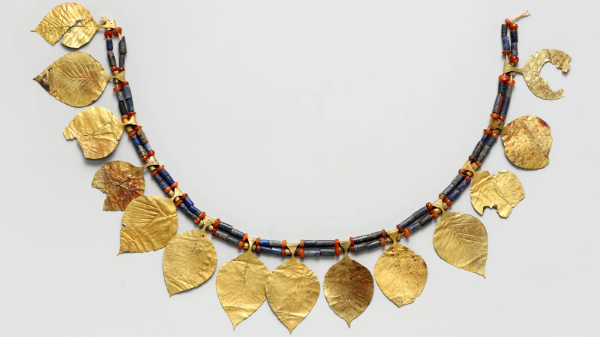
2. Early Origins and Technological Advancements: The origins of jewelry can be traced back to prehistoric times, where early humans fashioned rudimentary ornaments from natural materials. This section examines archaeological evidence, such as the discovery of beads and pendants in ancient burial sites across various geographical regions, including Africa, Europe, Asia, and the Americas, to elucidate the early techniques and materials used in jewelry making. It explores the transition from simple adornments to more sophisticated techniques, such as metalworking and gemstone cutting, highlighting key technological advancements that paved the way for the development of intricate jewelry craftsmanship. This section covers the period approximately from 30,000 BCE to the 500s BCE.
3. Cultural Significance and Symbolism: Throughout history, jewelry has served myriad purposes beyond mere decoration. This section delves into the cultural significance and symbolic meanings attached to different types of jewelry across various civilizations and geographical regions. Whether as markers of status and wealth, expressions of religious devotion, or tokens of love and affection, jewelry has played a pivotal role in shaping social dynamics and cultural identities. This section encompasses all historical periods and geographical regions.
4. Renaissance and Revivals: The Renaissance period witnessed a resurgence of interest in classical aesthetics and artistic expression, leading to a revival of ancient jewelry styles. This section explores how Renaissance jewelers drew inspiration from Greco-Roman designs while infusing their own innovations, thereby ushering in a new era of creativity and refinement in jewelry making. This section covers the period roughly from the late 14th century to the mid-17th century, primarily in Europe but with influences from other regions through trade and cultural exchange.
5. Industrialization and Mass Production: The advent of industrialization in the 19th century revolutionized the jewelry industry, enabling mass production and democratizing access to previously exclusive adornments. This section examines the impact of technological innovations, such as mechanized manufacturing techniques and the discovery of new gemstone sources across different continents, on the proliferation of jewelry production and consumption. This section covers the period from the early 19th century to the early 20th century, with significant developments occurring in Europe, North America, and Asia.
6. Contemporary Trends and Innovations: In the modern era, jewelry continues to evolve in response to changing tastes, technologies, and societal values. This section explores current trends in jewelry design, from minimalist aesthetics to sustainable practices, and highlights innovative approaches that push the boundaries of traditional craftsmanship. This section covers the period from the mid-20th century to the present day, with contributions from designers and artisans worldwide.
In conclusion, the history of jewelry is a testament to human ingenuity, creativity, and cultural diversity. By tracing its evolution through the lens of technical insights, archaeological research, and historical context across different geographical regions, we gain a deeper appreciation for the enduring allure of jewelry and its enduring significance in the tapestry of human civilization.
